
Every radar, amplifier and processor hits the same wall. Heat.
We built a material that carries it out of the hotspot four times faster than copper.
 solving hotspots.
Spin out of the University of Twente and CSIC. Five years of research, one patent, and the first paid pilot signed in 2026.




Heat is the main cause of failure.
Not voltage, not vibration. Temperature.
of failures in power semiconductors trace back to thermal constraints.
of component lifetime is lost for every 10 °C the junction runs hotter.
of input power leaves a high-power GaN amplifier as heat, not signal.
Sources: Revision of MIL-HDBK-217, Reliability Prediction of Electronic Equipment · Semiconductor lifetime and temperature, JetCool · GaN power amplifier design, Microwave Journal
Chips stopped getting cooler in 2005.
For thirty years, shrinking a transistor also cut its power. That ended with Dennard scaling. Transistor counts kept climbing. Power per chip did not fall with them. Every gain since has arrived as more heat in less area, and the cooling stack, not the lithography, now decides how hard electronics can run.
Indicative curves redrawn from K. Rupp, 50 Years of Microprocessor Trend Data (2022), original data to 2010 by M. Horowitz, F. Labonte, O. Shacham, K. Olukotun, L. Hammond and C. Batten.
The markets we are looking at.
-

Defense. A transmit module that runs 10 °C cooler lives twice as long and radiates harder. In a radar, that is the extra second of warning before a strike.
-
Telecom. Base station amplifiers that hold output at full load are the difference between a call that connects during an emergency and one that doesn't.
-
Medical. Imaging systems limited by heat trade resolution for duty cycle. Cooler electronics mean a tumor caught while it is still small enough to treat.
The HOT-Router.
A patented graphite structure, enhanced with nanomaterials, that moves heat sideways out of the hotspot.
Same chip, same power, same coldplate. Only the spreader differs.
cool hot
Illustrative simulation of in-plane heat spreading with a 4:1 conductivity ratio. Measured result on the bench: at 8.2 W input the copper reference reached 148 °C, the HOT-Router 105 °C.
We give heat somewhere to go.
Every module has one path for heat today: straight up. We design new, more efficient ones.
- Heat starts at the hotspot
A chip pushes hundreds of watts per square centimetre into a single point.
- We design the route
From your power map we decide where the heat travels and where it exits.
- The HOT-Router is that route made physical
Patented, built to your module, and tested side by side.
Europe wants sovereign materials.
Europe depends on a handful of countries for the materials inside its electronics, and the Critical Raw Materials Act is written to change that. Graphite processed in Europe, with standard industrial methods, removes one dependency from the bill of materials.
- 40%processed inside the EU by 2030
The Act's benchmark for every strategic raw material. Processing inside the Union is now policy, not preference.
- 65%maximum from any single country
By 2030 no more than 65% of the Union's yearly need for a strategic raw material should come from one third country.
- 34critical raw materials on the EU list
Natural graphite is one of them, flagged for both its economic importance and its supply risk.
Source: European Critical Raw Materials Act, Regulation (EU) 2024/1252
Built for the people who run chips hot.
Radar, electronic warfare and secure communications first. Power electronics next.
You're a fit if
most of these sound familiar.
A pilot takes approximately six months: your module drawing and power map in, HOT-Routers built to that footprint, a side-by-side thermal test, and a report you can put in a qualification file.
- You build or integrate transmit/receive modules, AESA arrays, jammers or satcom terminals with GaN power amplifiers.
- Junction temperature, not RF design, is what caps your duty cycle or output power today.
- European sourcing is a requirement on the next tender, not a nice-to-have.
Two founders, two labs.
Thermaflux is a 2026 spin-off of the University of Twente and the Spanish National Research Council, based on the Twente campus in Enschede. Five years of research, more than 1 M€ of funding and one patent went into the HOT-Router before the company existed.
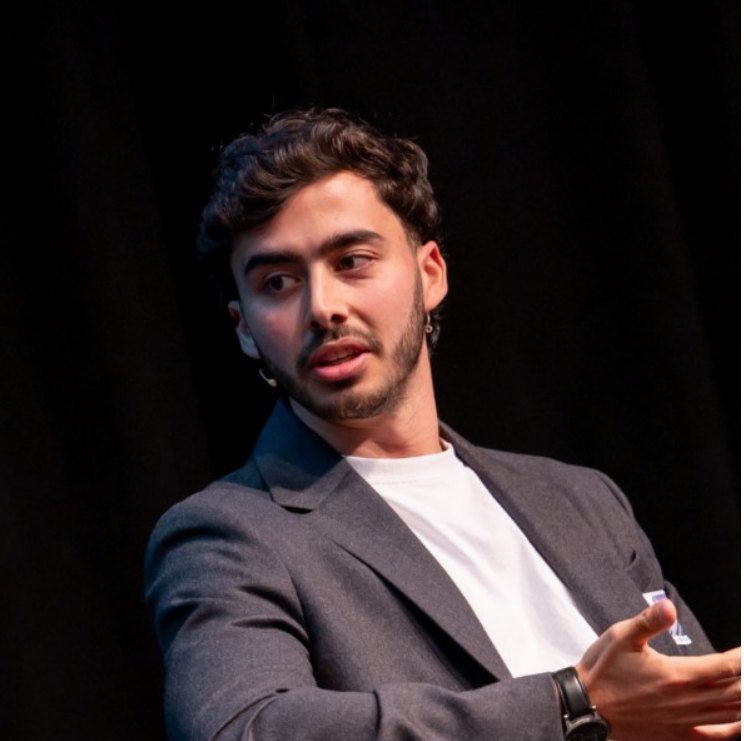
Business development for academic spin-offs. MSc Management of Technology.
LinkedIn
Postdoc. Three years on dynamic heating and cooling with graphite.
LinkedIn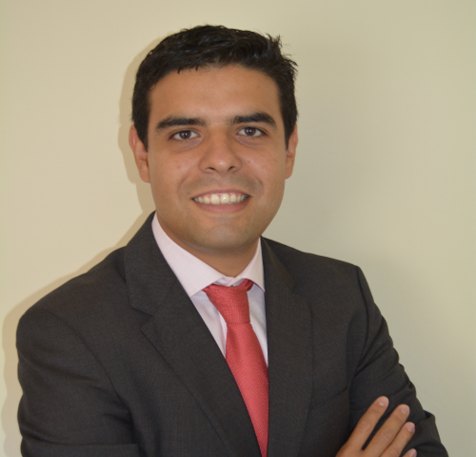
Professor, University of Twente. NWO Vidi laureate, EU consortium lead.
LinkedIn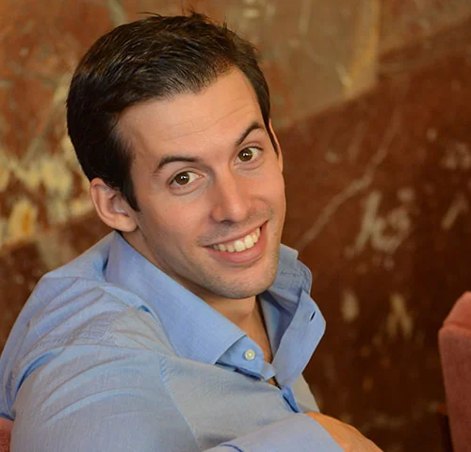
Senior scientist, CSIC. ERC Consolidator grant in thermal materials.
Research groupTell us where it gets hot.
A module drawing and a power figure are enough to start.
We reply within two working days.
Drienerlolaan 5
7522 NB Enschede
The Netherlands